PSR-1 Seismic Intrusion Detector
© Brooke Clarke 2007 -2018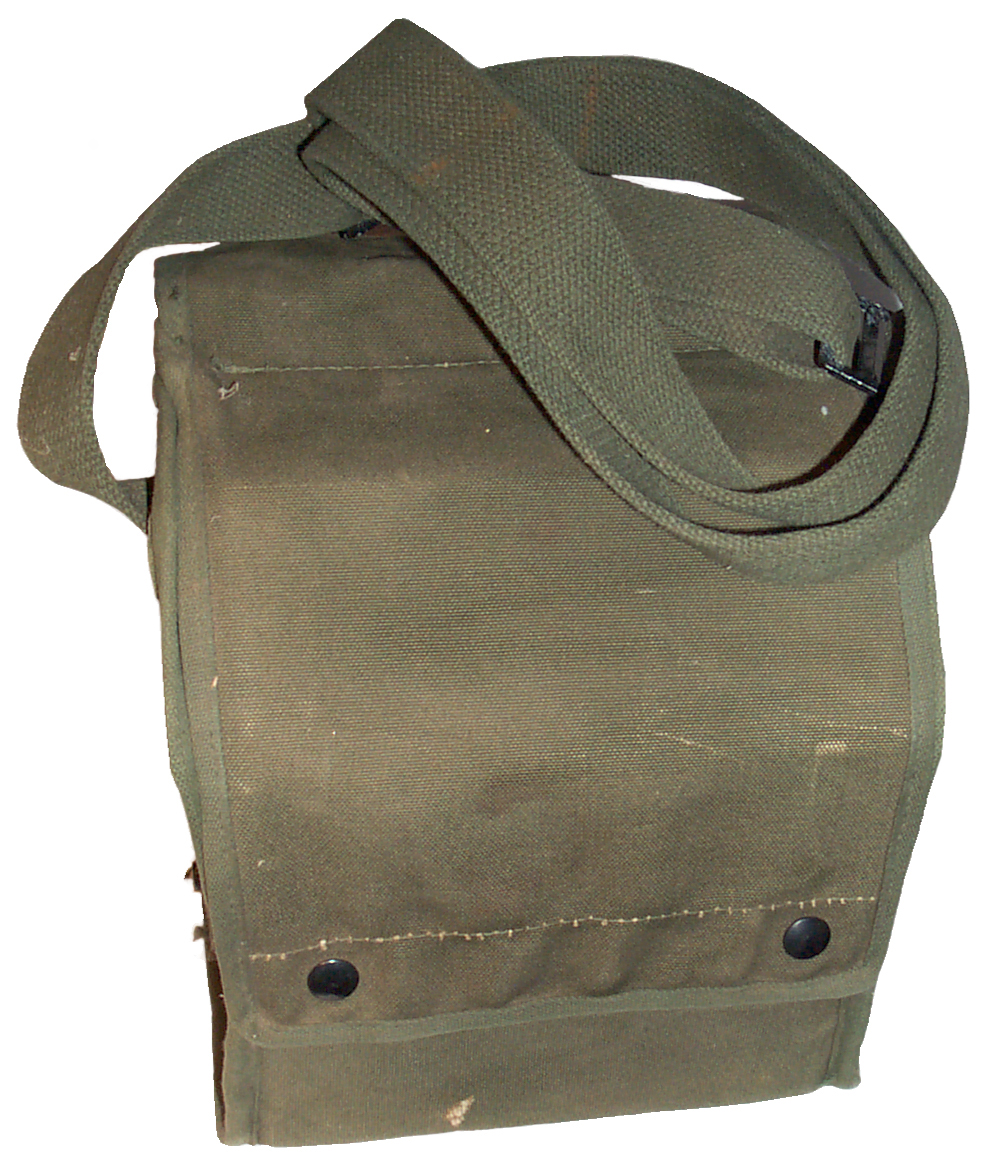 |
 |
 |
 |
 |
 |
 |
||
March 2018 s/n 1181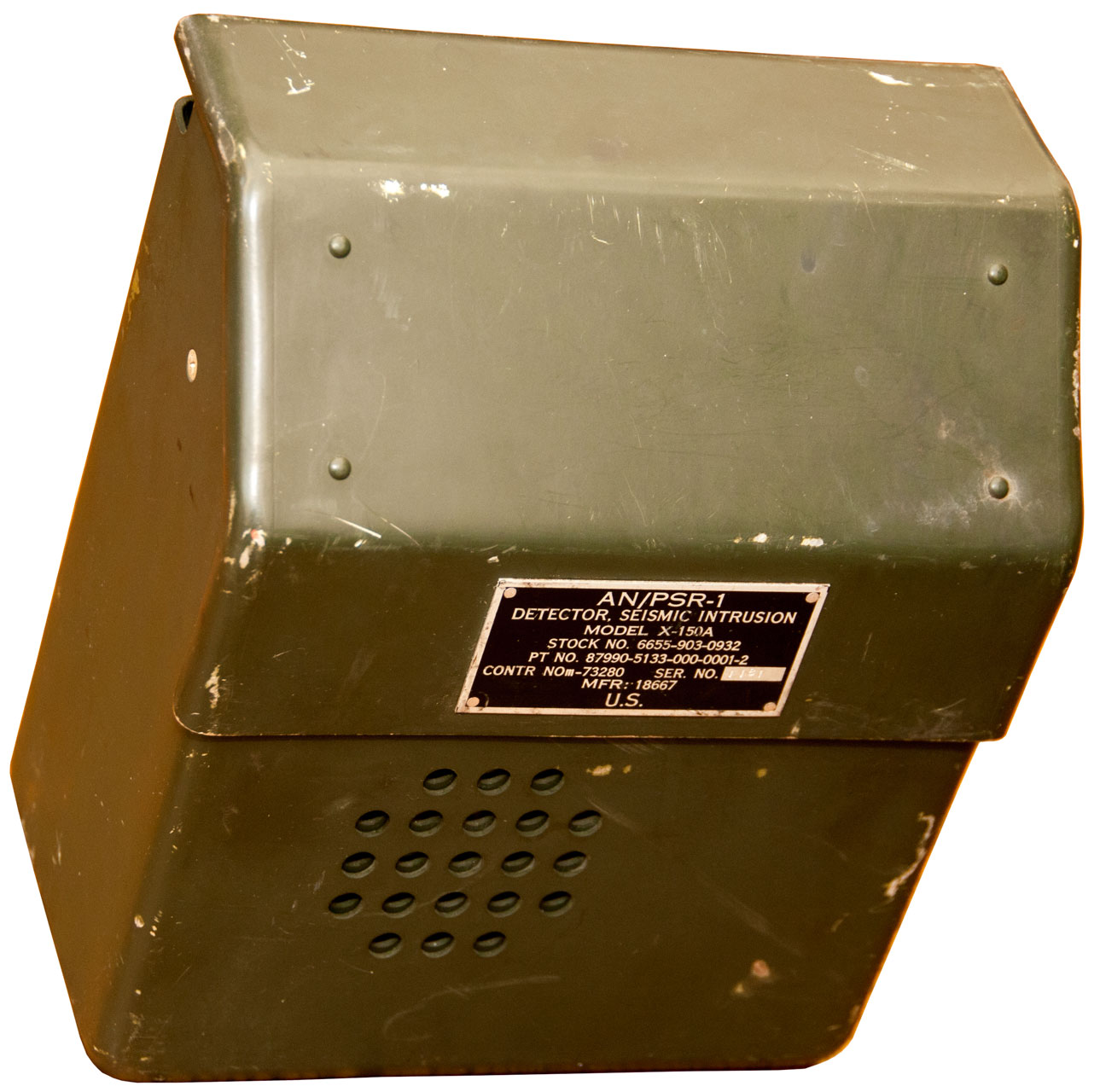 |
March 2018 s/n 1181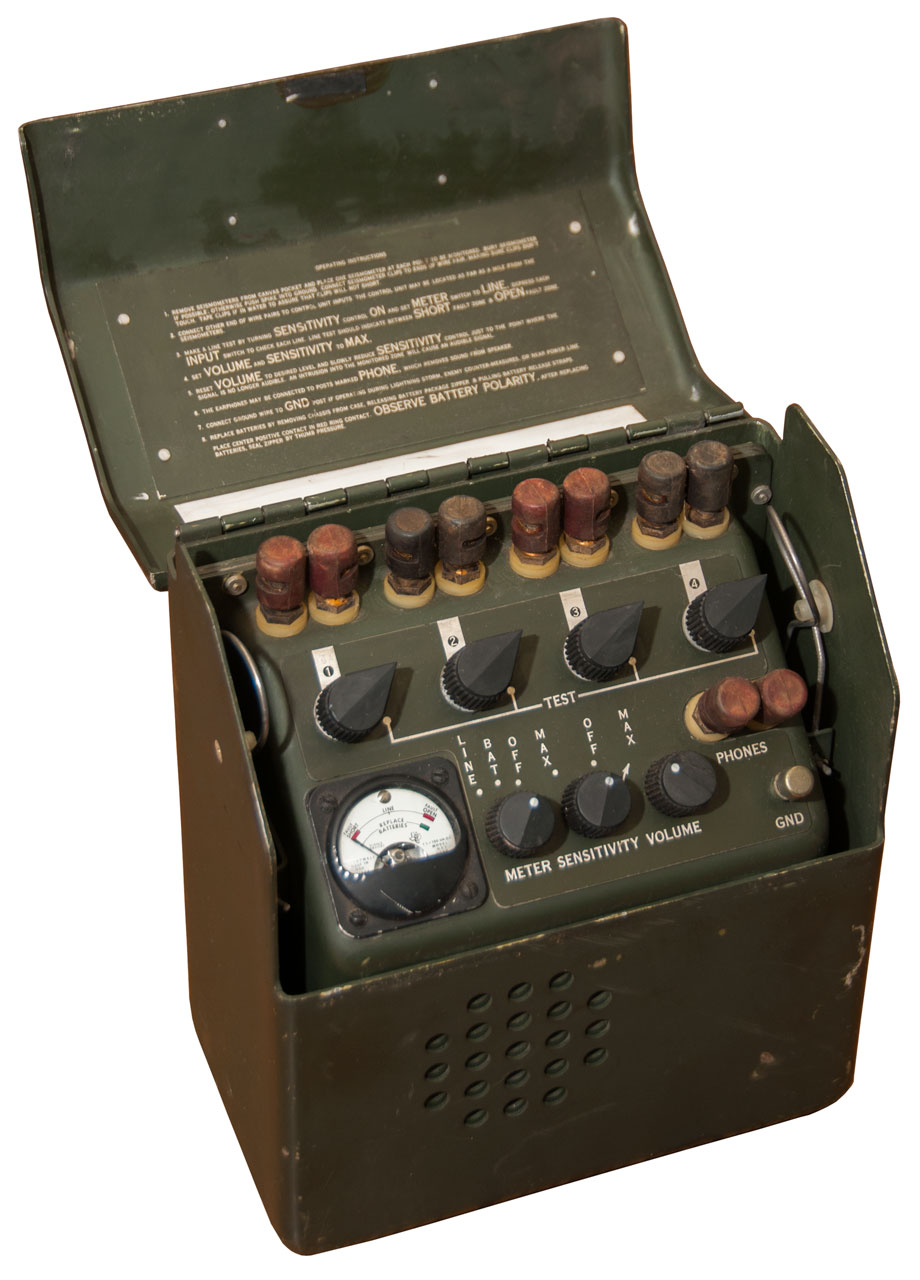 |
March 2018 s/n 1181 |
March 2018 s/n 1181 |
March 2018 s/n 1181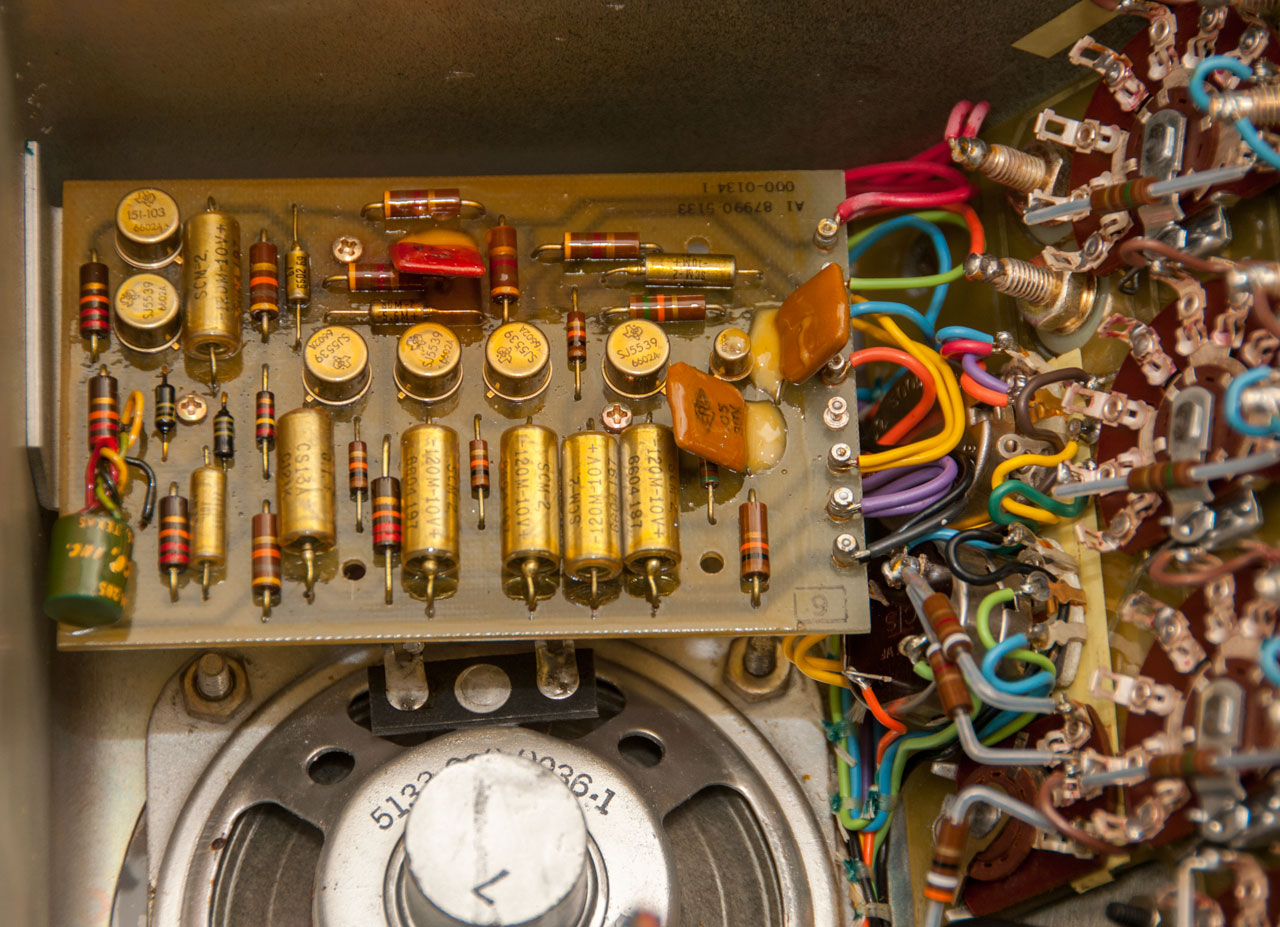 |
Background
The PSR-1A is a Vietnam era
seismic sensor designed to detect ground vibrations. It
uses wires between the geophones and the box. There are
4 separate inputs and each of these can have a number of
sensors. You can tell which of the 4 circuits is active,
thereby you know where there is action. It translates
the sub sonic signals into the audio spectrum so that you can
"hear" them (Wiki:
Automatic Target Recognition). It is very easy to
distinguish a women walking, a man walking or children
playing. Deer, cars, trucks, and helicopters all have
their own unique sounds which you can recognize without any
training. It runs on 6 each D batteries.
I used to live in a house where there was no view of the street from any of the commonly used rooms. By connecting an outside microphone to an inside speaker you could hear "out front" and/or using the PSR-1 you knew what was happening even though you could not see.
I'm guessing that prior to the Vietnam era Texas Instruments was doing some work with geophones in support of the Oil Business that's a big thing in Texas. When a need arose for an outdoor intrusion detector they were the company that had the needed experience.
Of all the outdoor intrusion detectors this is my favorite because it's the only one that allows you to hear what's going on.
In March 2018 I got another PSR-1 and it's marked the same as the prior unit except the serial number is 1181.
I used to live in a house where there was no view of the street from any of the commonly used rooms. By connecting an outside microphone to an inside speaker you could hear "out front" and/or using the PSR-1 you knew what was happening even though you could not see.
I'm guessing that prior to the Vietnam era Texas Instruments was doing some work with geophones in support of the Oil Business that's a big thing in Texas. When a need arose for an outdoor intrusion detector they were the company that had the needed experience.
Of all the outdoor intrusion detectors this is my favorite because it's the only one that allows you to hear what's going on.
In March 2018 I got another PSR-1 and it's marked the same as the prior unit except the serial number is 1181.
Theory of Operation
The geophones have a resonant
frequency around 5 to 20 Hz which for practical use is below
human hearing. They pickup the sound of the earth
shaking as caused by people walking, vehicles with engines,
and most of all helicopters nearby. Inside the PSR-1 a
circuit translates the subaudible frequencies into a range
that can easily be heard.
The geophones can easily be hidden and the simplest way is to bury them underground along with the WD-1 phone wire that connects them to the main unit. Attaching a sensor under a suspended floor or bridge provides mechanical amplification of the sound. The poorest place to put a geophone is on concrete. Vertical orientation seems to work best for most things.
Unlike all the other systems that use geophones this one lets you hear the sounds. In the other systems there is an alarm, but when it goes off you don't know if it was an animal, one person, or a division. The benefit is that those systems can be set and left alone.
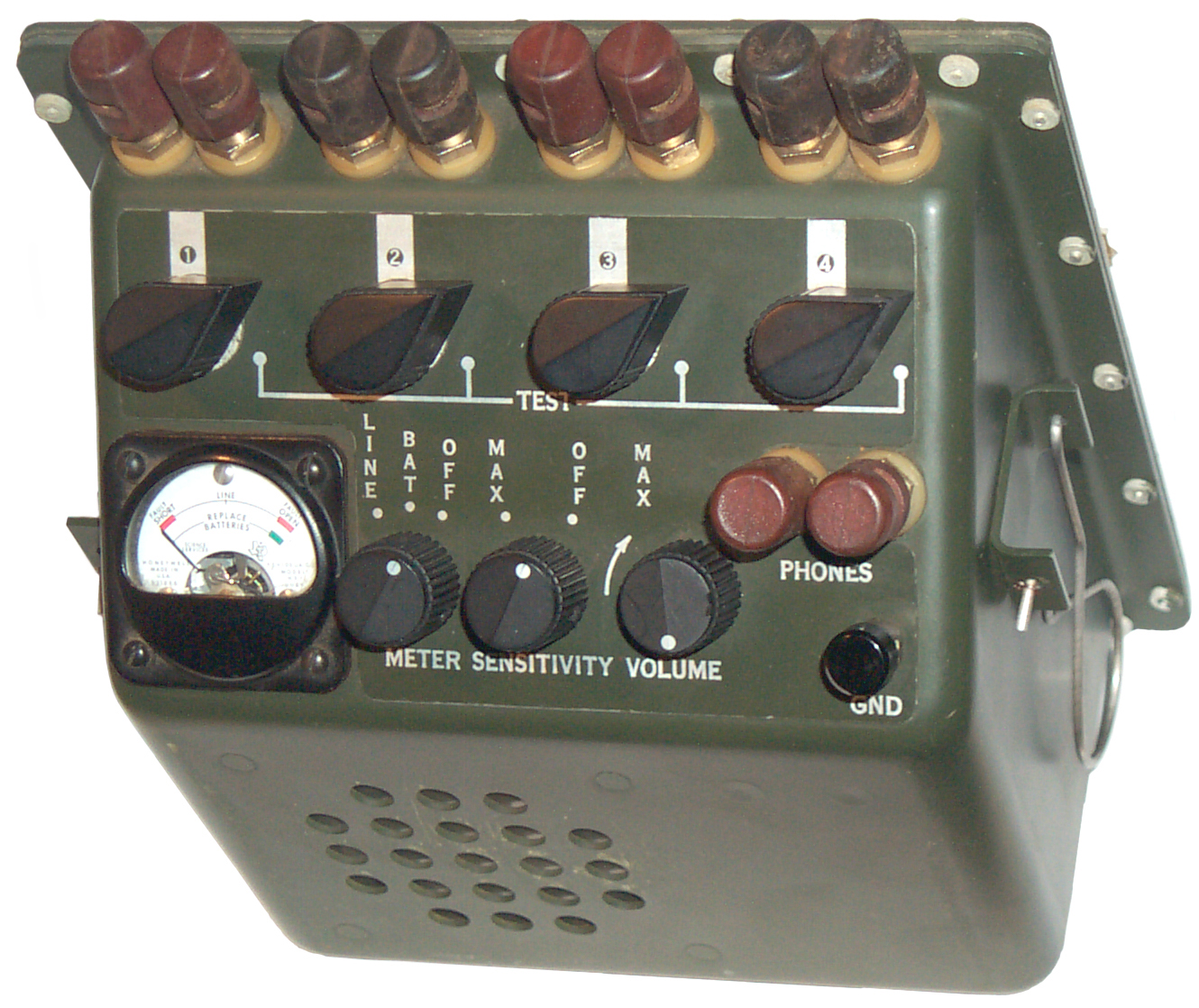
The label says:
AN/PSR-1
DETECTOR, SEISMIC INTRUSION
MODEL X-150A
STOCK NO. 6655-903-0932
PT NO. 87990-5133-000-0001-2
CONTR NOm-73280 SER. NO. T-17
MFR: 18667
An email from Mike M. says his data plate reads:
The geophones can easily be hidden and the simplest way is to bury them underground along with the WD-1 phone wire that connects them to the main unit. Attaching a sensor under a suspended floor or bridge provides mechanical amplification of the sound. The poorest place to put a geophone is on concrete. Vertical orientation seems to work best for most things.
Unlike all the other systems that use geophones this one lets you hear the sounds. In the other systems there is an alarm, but when it goes off you don't know if it was an animal, one person, or a division. The benefit is that those systems can be set and left alone.
The label says:
AN/PSR-1
DETECTOR, SEISMIC INTRUSION
MODEL X-150A
STOCK NO. 6655-903-0932
PT NO. 87990-5133-000-0001-2
CONTR NOm-73280 SER. NO. T-17
MFR: 18667
An email from Mike M. says his data plate reads:
AN/PSR-1A
DETECTING SET, INTRUSION
STOCK NO. 6655-880-1997
CONTRACT NO M00027-68-C-0079
SERIAL NO. A16x
MFR 14056
U.S
Geophone
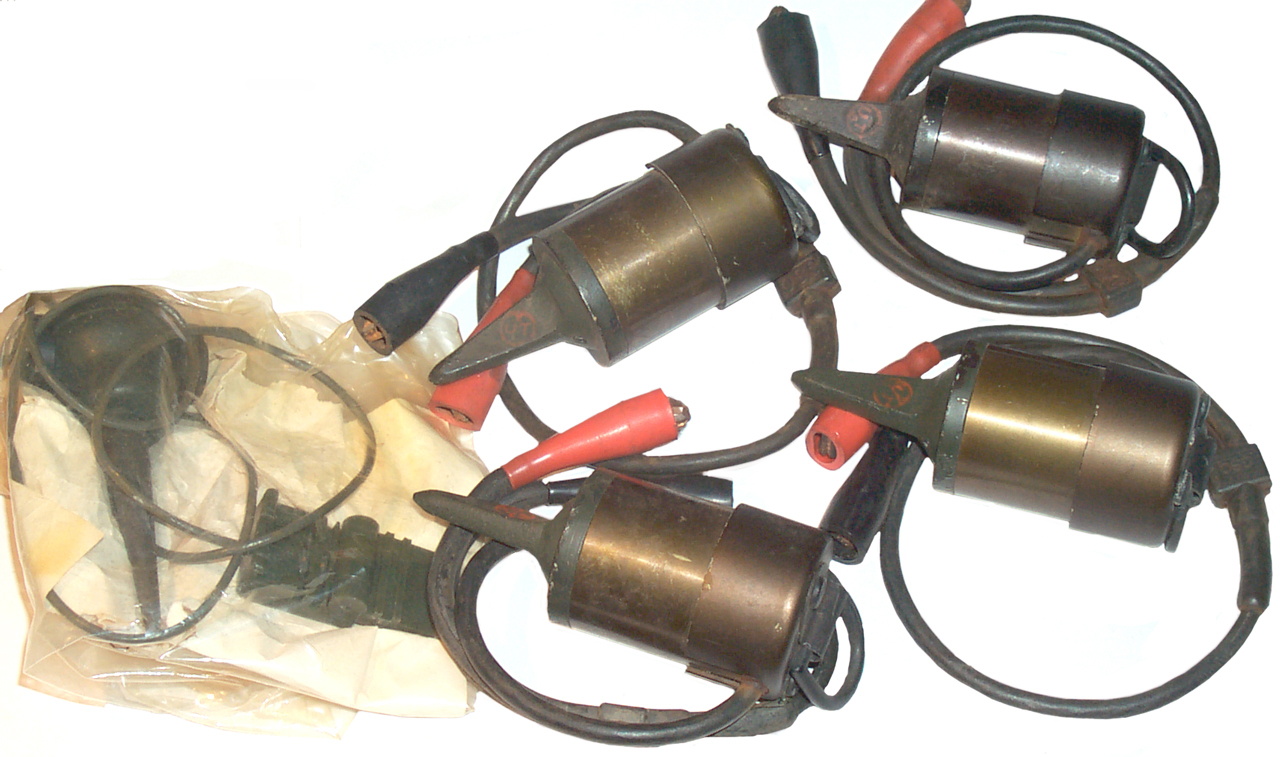
The geophone consists of a
permanent magnet surrounded with a coil of wire.
One of those is connected firmly to the housing and the other
is held by springs. When the earth moves a voltage is
generated. The operation is very similar to that of a
dynamic microphone only the frequency response goes much
lower.
Geophones are very similar to seismometers. As far as I can tell seismometers are more precise and typically calibrated. Also seismometers are made so that they can be used not only vertically but also horizontally. A typical seismometer setup would have vertical, North-South and East-West sensors. Some seismometers are optimized for weak signals and others for strong motion. Geophones are designed for detecting local events, not weak distant events.
The newest geophones use MEMS integrated circuits that act as an accelerometer instead of the coil and magnet approach. For most applications the results are about the same. The IC type cost a lot less.
Geophones are very similar to seismometers. As far as I can tell seismometers are more precise and typically calibrated. Also seismometers are made so that they can be used not only vertically but also horizontally. A typical seismometer setup would have vertical, North-South and East-West sensors. Some seismometers are optimized for weak signals and others for strong motion. Geophones are designed for detecting local events, not weak distant events.
The newest geophones use MEMS integrated circuits that act as an accelerometer instead of the coil and magnet approach. For most applications the results are about the same. The IC type cost a lot less.
Batteries
You should use caution when using modern batteries. A user reports that they run very hot. See the explanation below:Most modern batteries have the positive terminal and the case connected together and the insulating section near or at the base. The battery holder clips in the PSR-1 are connected to the negative ground side electrically. If a battery with a positive case is installed and during installation the battery clip cuts through the thin plastic battery outer wrap then some of the batteries will be shorted out and get very hot.To prevent this you can wrap the battery with some insulating tape where the battery clip is going to be and use caution when installing the battery.
Search and Rescue Use
It turns out that this set can be used for search and rescue for things like collapsed buildings. In the past survivors have said that they could hear the rescue workers, but they could not be heard. Over a bull horn the the rescue workers can be told to be quiet and the survivors to tap on something then listen with the PSR-1. This is a much lower cost solution than the FEMA specific device that does this.
Documents
A look up on CAGE code 18667 yields:
HALLIBURTON
GEOPHYSICAL SERVICES INC, 6909 Southwest FWY, PO Box 36306,
Huston, TX 77236-6306.
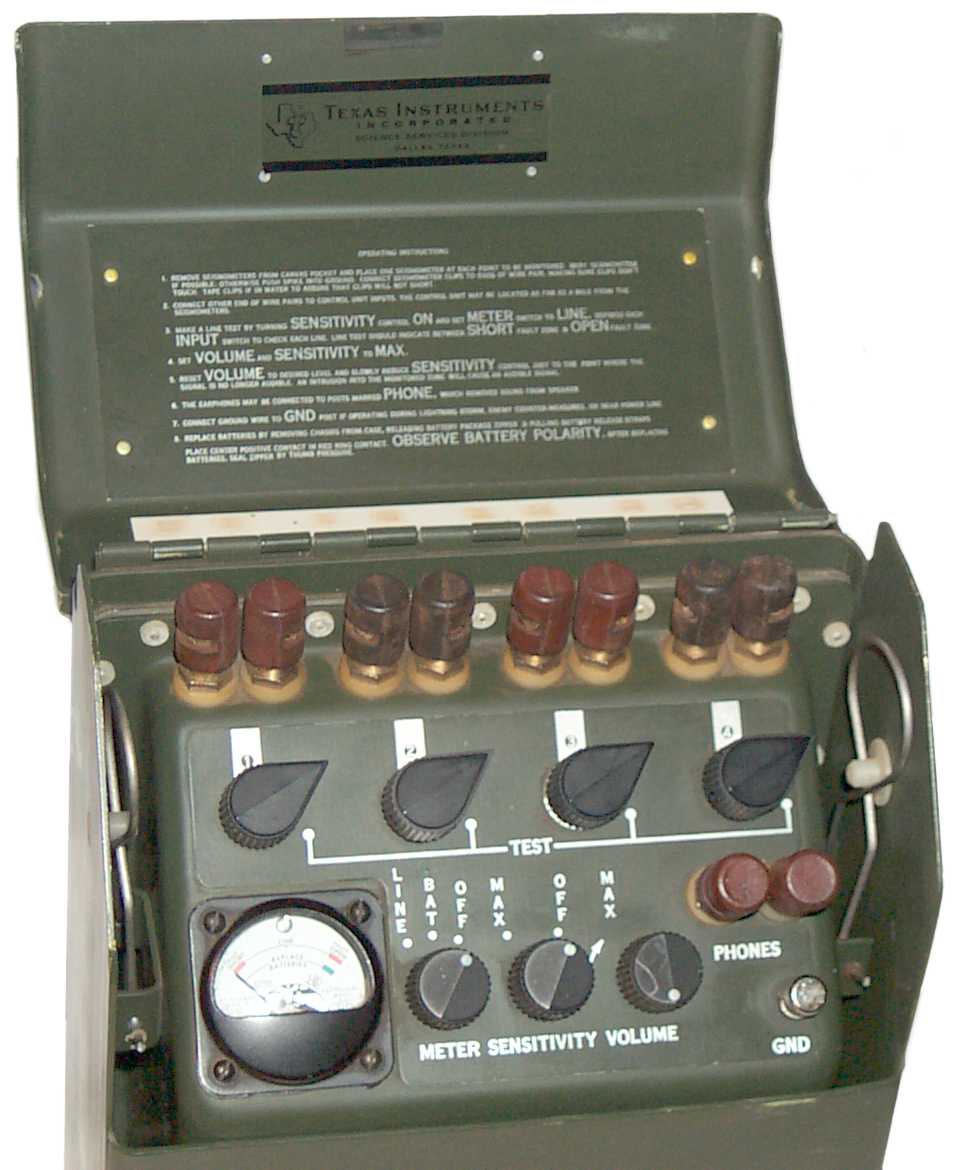
Inside the cover is a stick on label that says "Texas Instruments Incorporated, Science Services Division, Dallas, Texas. Below this label a plate with the operating instructions riveted to the cover.
TM 11-6655-202-15 Detecting Set, Intrusion AN/PSR-1, 18 November 1966, change 2: 16 Aug 1968
White Paper
On Line Journa1 of Earth Sciences 2 (4): 113-117, 2008, ISSN:
1991-7708, © Medwell J owna1s, 2008
Fabrication of a Portable ULF Signal Receiver for Monitoring Electromagnetic Earthquake Precursors
0.001-45 Hz. not specifically for the PSR-1, but a similar application.
The UWO Meteor Infrasound Group - 0.02 - 20 Hz meteor detection,
3296587 Intrusion Detector System, Buford M. Baker (TI), Jan 3 1967, 367/136 ; 340/384.7; 340/566; 367/93 -
US Secretary of Army ,
1968-08-02 - seismic sensor -> RF AM transmitter
3508238 Intrusion Detector System, Buford M. Baker (TI), Apr 21 1970, 340/551 - loop magnetic field sensor
3564493 Acoustic energy detection system, William L Hicklin, US Secretary of Navy, 1971-02-16 - separates aircraft from ground vehicle sounds
3585581 Seismic sensor apparatus, Kenneth E Aune, Gerald F Jacobs, Gary W Spence, Honeywell, 1971-06-15, - uses seismic & acoustic inputs
3686658 Intrusion detector responsive to change in dominant frequency, Marvin D Wilt, Teledyne Geotech, 1972-08-22, - "... A system for detecting an intrusion into a surveillance area resulting in a change in the noise characteristic within the area from ambient type noise to a composite of ambient type noise and cultural type noise, causing a substantial shift in the noise frequency spectrum..."
3699509 Seismic system for real-time reporting, US Secretary of Army, 1969-10-21 -
3717864 Periodic event detector system, Teledyne Inc, 1971-11-02
-
3806907 Premier Intrusion Detection System with Common Mode Rejection, Bound et al.(TI), Apr 23 1974, 340/566 ; 340/525 - buried piezoelectric sensors
Inside the cover is a stick on label that says "Texas Instruments Incorporated, Science Services Division, Dallas, Texas. Below this label a plate with the operating instructions riveted to the cover.
Manual
Marine Corps (TM-04704B-15) dated January 1968 - contains schematic and parts listTM 11-6655-202-15 Detecting Set, Intrusion AN/PSR-1, 18 November 1966, change 2: 16 Aug 1968
White Paper
On Line Journa1 of Earth Sciences 2 (4): 113-117, 2008, ISSN:
1991-7708, © Medwell J owna1s, 2008Fabrication of a Portable ULF Signal Receiver for Monitoring Electromagnetic Earthquake Precursors
0.001-45 Hz. not specifically for the PSR-1, but a similar application.
The UWO Meteor Infrasound Group - 0.02 - 20 Hz meteor detection,
Patent
3261009 Seismic personnel sensor, Melpar Inc, 1964-03-10 -3296587 Intrusion Detector System, Buford M. Baker (TI), Jan 3 1967, 367/136 ; 340/384.7; 340/566; 367/93 -
The geophone output controls a
simple blocking oscillator which generates an audible output
Calls:
3480942
Transmitting seismic sensor system,Calls:
2942247 Alarm Warning for Swimming Pools, Lienau et al, Jun 21 1960, 340/660 ; 340/566; 367/136 -Called by:
senses 0.1 to 50 Hz3049699 Sound Actuated Detection and Alarm System, Larrick et al., Aug 14 1962, 340/566 ; 330/51 - selective frequency audio based
3109165 Intruder Detecting System, S.M. Bango (Specialties Dev Corp), Oct 29 1963, 340/566 ; 367/191 - buried piezo sensors
3132330 Electric Alarm Systems, M. Donner, May 5 1964, 73/647 ; 340/384.7; 340/566; 340/662; 367/14 - detects ground shaking less than 100 Hz
3147467 Vibration Detection Vault Alarm System, P. Laakmann (ADT), Sep 1 1964, 340/566 - long time constant audio based system
3168729 Proximity Alarm, Herman W. Volbergv (Crand Prod Mfg Co), Feb 2 1965, 340/435 ; 212/280; 330/100; 330/109; 330/112; 340/384.7; 340/660; 340/685 -external power lines are capacitive sensed and control an oscillator
3192516 Vibration Detector, Simpkins et al. (HP), Jun 29 1965, 340/605 ; 340/692; 367/135; 367/2; 73/40.5A; 73/592 -Ultrasonic based intrusion detection by mixing down conversion
3573817 Monitoring System, A.E. Akers (North American Rockwell Corp), Apr 6 1971, 340/522 ; 340/539.1; 340/539.26; 340/551; 340/552; 340/561; 340/566; 367/93 - Uses audio, seismic, magnetic, electromagnetic & proximity inputs. (many citations & Referenced by)
3662326 Subaudible Frequency Detection System, Paul S. Dennis Jr. (Hazeltine Corp), May 9 1972, 367/136 ; 340/566 - a simple 3 transistor circuit used with amplifiers and filters.
3984803 Seismic intrusion detector system Oct 5, 1976
4700332 Environmental interference detection device Oct 13, 1987
4975891 Vehicle sensing device and method Dec 4, 1990 - looks at the response vs. time plot
3508238 Intrusion Detector System, Buford M. Baker (TI), Apr 21 1970, 340/551 - loop magnetic field sensor
3564493 Acoustic energy detection system, William L Hicklin, US Secretary of Navy, 1971-02-16 - separates aircraft from ground vehicle sounds
3585581 Seismic sensor apparatus, Kenneth E Aune, Gerald F Jacobs, Gary W Spence, Honeywell, 1971-06-15, - uses seismic & acoustic inputs
3686658 Intrusion detector responsive to change in dominant frequency, Marvin D Wilt, Teledyne Geotech, 1972-08-22, - "... A system for detecting an intrusion into a surveillance area resulting in a change in the noise characteristic within the area from ambient type noise to a composite of ambient type noise and cultural type noise, causing a substantial shift in the noise frequency spectrum..."
3699509 Seismic system for real-time reporting, US Secretary of Army, 1969-10-21 -
3717864 Periodic event detector system,
3806907 Premier Intrusion Detection System with Common Mode Rejection, Bound et al.(TI), Apr 23 1974, 340/566 ; 340/525 - buried piezoelectric sensors
3806908
Premier Intrusion Detection System with Common Mode Rejection,
Bound et al.(TI), Apr 23 1974, 340/525 ; 340/566 -
3806909
Stress Sensor for a Perimeter Intrusion Detector System, Lloyd
R. Bound (TI), Apr 23 1974, - 310/367 ; 310/330;
310/338; 340/566; D25/46
A 6" deep trench is used for the system cable and the sensor is driven down 3 feet using a jack hammer type tool
3845461 Intrusion detection system, D Foreman, Honeywell, 1974-10-29, - cited by 23 patents -
3922663 Seismic human footstep detector, Honeywell Inc, 1974-05-30 - based on
timing of event and time between events
4012649 Piezoelectric stress/strain intrusion detectors, John C. Cook, James D. Kerr, Teledyne Inc, 1977-03-15, - sensors at intervals along buried cable
4188612 Piezoelectric seismometer, James D. Kerr, Teledyne Inc, 1980-02-12, - short period seismometer
4197479 Intrusion detecting sensor assembly using a piezoelectric bender, Martin G. Gudzin, Teledyne Inc, 1980-04-08, -
4356423 Pressure sensitive intrusion sensing line, Martin G. Gudzin, Teledyne Inc,1982-10-26, - piezo disc based
4604738 Method and apparatus for classification of a moving terrestrial vehicle as light or heavy, Raj Aggarwal, Bindinganavle R. Suresh, Honeywell, 1986-08-05, - 11 citations, 21 cites,
A 6" deep trench is used for the system cable and the sensor is driven down 3 feet using a jack hammer type tool
3845461 Intrusion detection system, D Foreman, Honeywell, 1974-10-29, - cited by 23 patents -
3922663 Seismic human footstep detector, Honeywell Inc, 1974-05-30
4012649 Piezoelectric stress/strain intrusion detectors, John C. Cook, James D. Kerr, Teledyne Inc, 1977-03-15, - sensors at intervals along buried cable
4188612 Piezoelectric seismometer, James D. Kerr, Teledyne Inc, 1980-02-12, - short period seismometer
4197479 Intrusion detecting sensor assembly using a piezoelectric bender, Martin G. Gudzin, Teledyne Inc, 1980-04-08, -
4356423 Pressure sensitive intrusion sensing line, Martin G. Gudzin, Teledyne Inc,1982-10-26, - piezo disc based
4604738 Method and apparatus for classification of a moving terrestrial vehicle as light or heavy, Raj Aggarwal, Bindinganavle R. Suresh, Honeywell, 1986-08-05, - 11 citations, 21 cites,
References
Ref 1. 1960's US intrusion detector AN/PSR-1A, 17:17 -
Ref 2. AN/PSR-1A Intrusion Detector Update and Test, 8:46 - gnd stake includes flat blade screw driver,
Links
AN/PSR-1A INTRUSION DETECTOR by Dan V.Geo Space Corporation - geophones -cases -
page created July 23 2007.