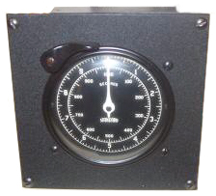
Before electronic counters, like the
HP vacuum tube neon 500 series that used the
AC4A decade counting module analog
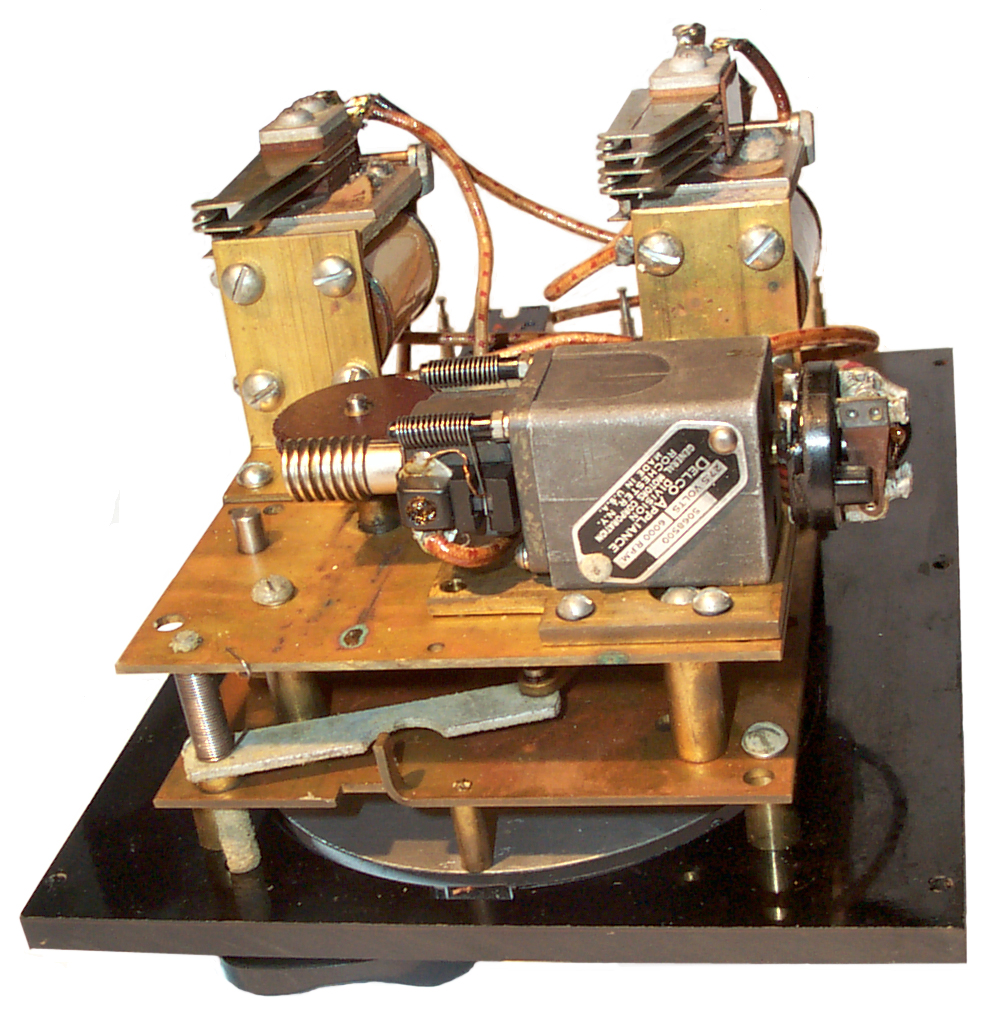
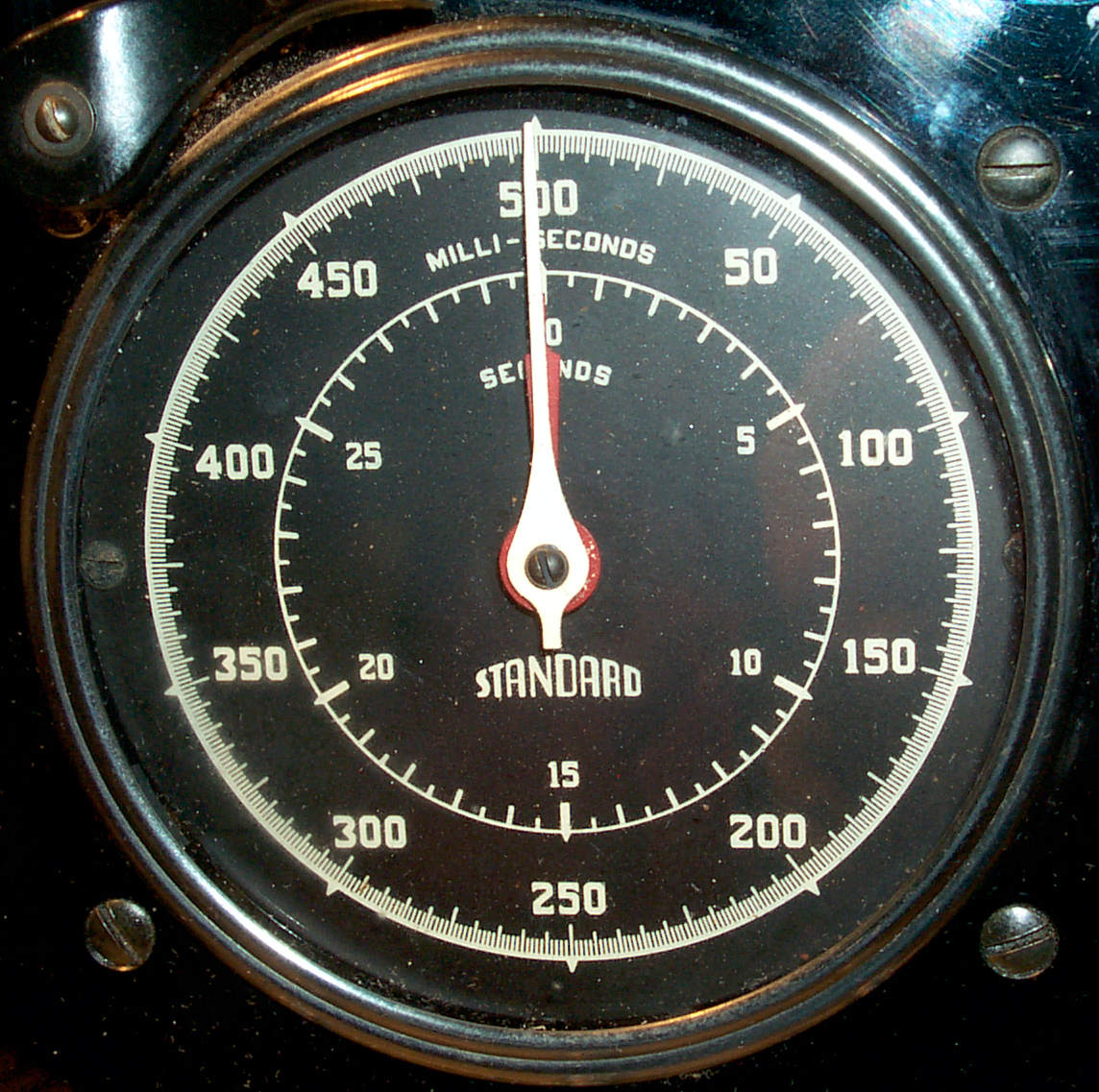
mechanical methods were used. This prrticular model is DC
powered and counts in milli seconds. The 6,000 RPM (100
Rev/sec) 27 VDC motor is geared down by 50 times so the fast hand
moves at 2 Rev/sec. The slow hand counts in half seconds up
to 15 seconds.
There are 4 electromagnetic components:
- The DC motor with a govener
- The clutch
- Two relays
The instructions say to let the motor run for three minutes before
making a measurement. Depending on how the two toggle
switches are set you can make different types of
measurements. With both switches off the clutch engates when
+27 volts is on terminal "I" and stops when the input stops, so
measures pulse width. With both switches on the timer starts
like before, but the relays latch and hold so the timer keeps
running after "I" goes low. It stops when input "II" goes
high thus making a time interval measurement.
If you know of any applications where these were used by the Air
Force (Army Air Force?) or have a manual please
let me know.

Although made in 1951 it still functions, although I haven't
checked the calibration. It makes a sound that I remember
hearing in movies, maybe of atomic bomb tests or some other
scientific experiment. It has a distinctive sound.
There is some type of soft fuzzy off white substance on some of
the shiny metal surfaces. For example the zero lever going
from the lower left post up and to the right is completly covered
with it. The screw in the lower right has it's head
covered. The screws on the back of the relays are shiny and
clean. It wipes off easily, but if not cleaned will come
loose and get on the dial or other parts.
I think it's possible to dissassemble the clock work while leaving
all the electromagnetic items connected to thier wires. That
would allow cleaning the mechanical parts and putting fresh modern
lubricants on.
If you have any maintanance information
let
me know.