Kelvin Connection Measurements
©Brooke Clarke,
N6GCE
Resistance
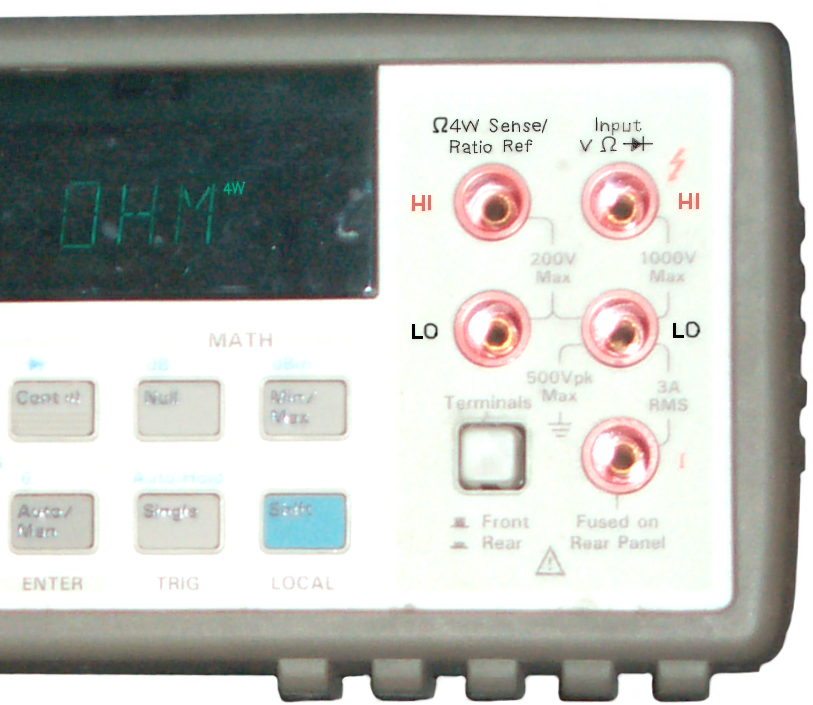
Many Digital Multimeters, like the Hp/Agilent 34401, have a 4 wire
connection for resistance in addition to the two wire connection.
There is a special set of leads for use with the Kelvin
connection.
The 34401 reads out to 0.000,1 Ohms. The 4 wire, Kelvin,
connection is
very simple. One of the pairs has a current source and the other
pair
is a voltmeter. Suppose that all 4 wires had 10 Ohms of
resistance and
you want to measure a 1 Ohm resistor using a 1 ma current source.
If you used a 2 wire Ohm meter then 1 ma * 1 Ohm is 1 mv, but the leads
contribute 2 * 10 Ohms * 1 ma = 20 mv of error. You could
try to use
the delta DMM function by shorting the leads and pressing zero, but the
lead resistance may vary as the leads are moved making it impossible to
measure a resistance that's much smaller than the lead
resistance. The
contact resistance may also be greater or equal to the resistance of
the device you're trying to measure.
For a 4 wire, Kelvin, connection: The resistance in the voltmeter leads
has an insignificant effect since the Voltmeter input impedance is 10
Meg Ohms. Since the meter is connected on the device side of the
lead
resistance in the current pair that voltage drop is not seen by the
voltmeter. The voltmeter ends up reading 1 mv. Note that if
there is
contact resistance and the voltmeter is connected closer to the DUT
than the current pair the contact resistance will also be removed from
the measurement. Also note that it really doesn't matter what the
lead
+ contact resistance is, it will be removed from the measurement as
long as the current source has the compliance to keep supplying the
same current even though the voltage gets large.
By measuring an accurately known resistor using the Kelvin connection
you can determine the scale factor (calibration of both the current
source and the voltmeter). This could then be used to improve the
overall accuracy of the system.
same as Pomona model 5940
 |
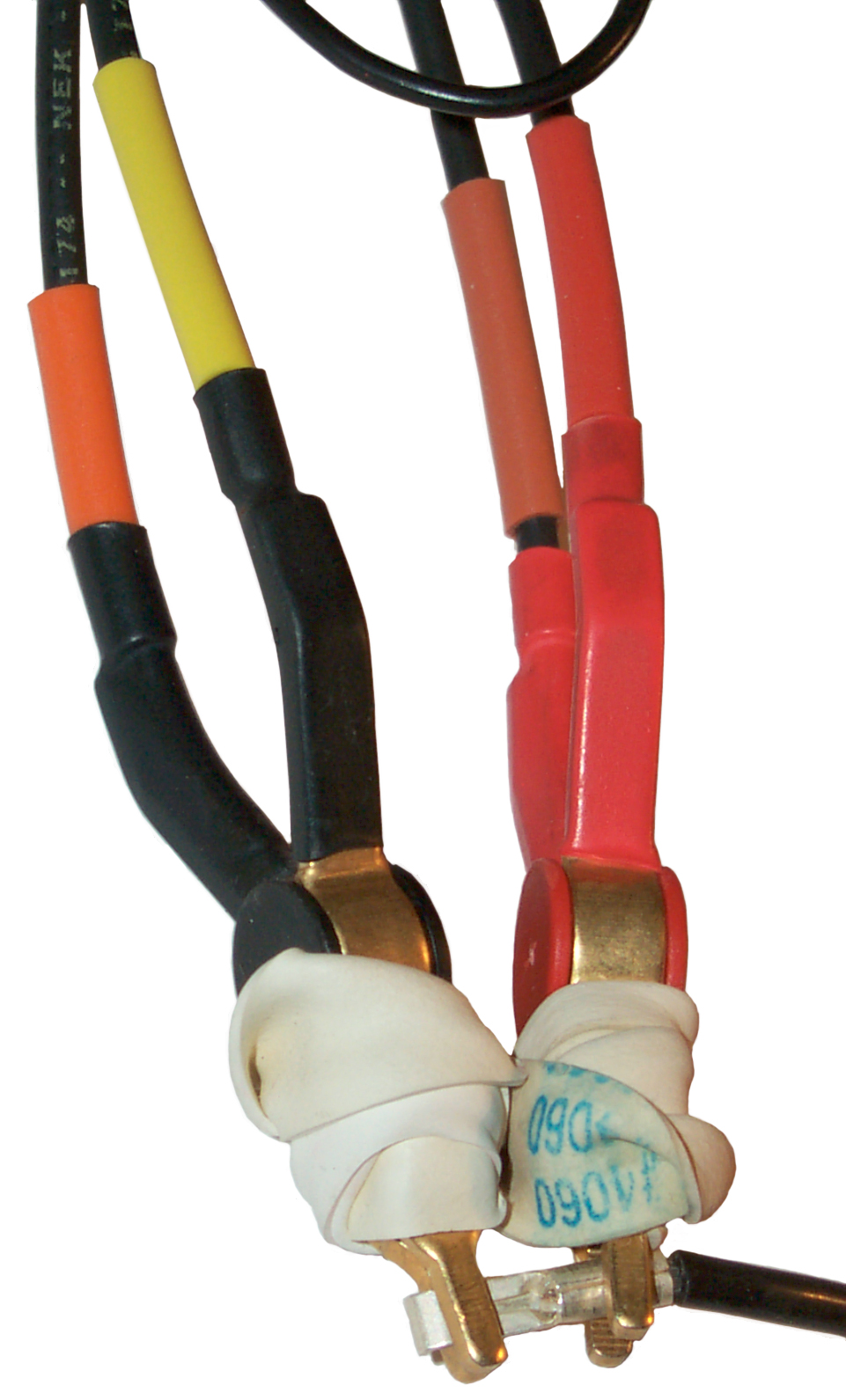
The
clips have each jaw insulated from the other jaw and the leads are
color coded. The idea is to use these with the 34401 in 4-Wire
Ohms mode and thus be able to measure very small resistances without
any contributation of the test leads or the resistance of the
connecting joint. |
|
Here a 30 Amp Power Pole Contact (silver plated copper) is being used as the zero reference.
Immediatly after making the connection the resistance was 4.5 milli
ohms and after an hour was 1.8 milli Ohms. Although after an hour
the variability in the readins is less, it's still a little over 1
milli Ohm.
These leads when combined with the 34401 seem good for mayb 0.01 Ohms, but not 0.001 Ohms.
The specification is 0.010% of reading + 0.004 Ohms.
The ability of this system to measure very near zero is at the spec
limit. But when larger values are measured it does fine.
There's no need to use NULL for removing the zero since it's in the spec noise.
I checked a pocket Amp meter for which the calculated coil resistance
was 2.65 milli Ohms and it measured 2.8 milli Ohms, close enough.
|
|
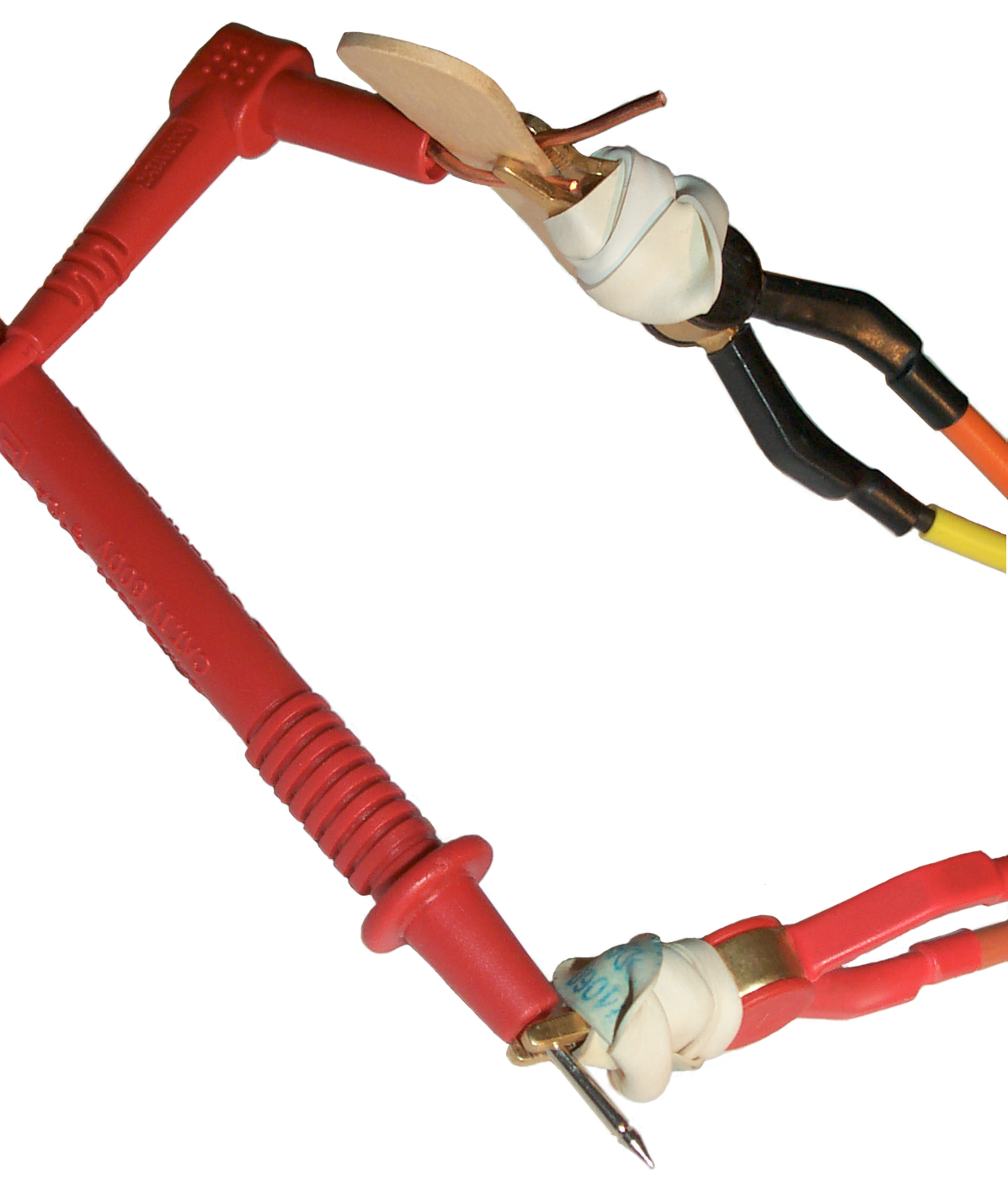
As a sanity check the resistance of a Greenley (spelling?) test lead
from my Fluke 87 DMM was measured. The problem was the safety
shrouded Banana plug. By sticking a couple of short bare copper
14 AWG wires into the gap between the metal center plug and the metal
shell liner and they using a popsickle stick to keep the wires from
shorting to each other a Kelvin connection was made.
The reading is 0.040.5 Ohms (that's 40 milli Ohms) and has been stable
for some time. It did decrease a few milli Ohms from when first
connected but after a few minutes stablized.
|
Conclusion
Using low current DC methods, like the
34401 for resistances that are below maybe 50 milli Ohms is not going
to work because of thermal effects. That's why milli Ohm
meters like the
HP 4328A use an AC method. The other option is to use a DC current
that's large enough that the thermal voltages are very small by
comparison. Maybe 1 Amp instead of 1 milli Amp.
Analog Devices has
AN-306 Synchronous System Measures Micro Ohms. It's based on their
AD630 Synchronous Balanced Modulator Demodulator which can pull a signal out of noise that's 100 dB larger.
Current
When measuring the voltage drop across a current shunt it's important
how you connect the lugs to the studs on the shunt.
Wrong Way
If the voltmeter leads are
installed closer to the source of current then the voltage drop in the
high current contact resistance will
become part of the measurement making it less accurate.
Correct Way (just an idea, not tested)
Connect
the voltage sensing leads close to the shunt and the high current
connections further from the shunt. The idea is that there's some
finite resistance between the voltage sense lug and the current supply
lug. By wiring the voltage sense leads close to the shunt those
small extra resistances are not part of the measurement.
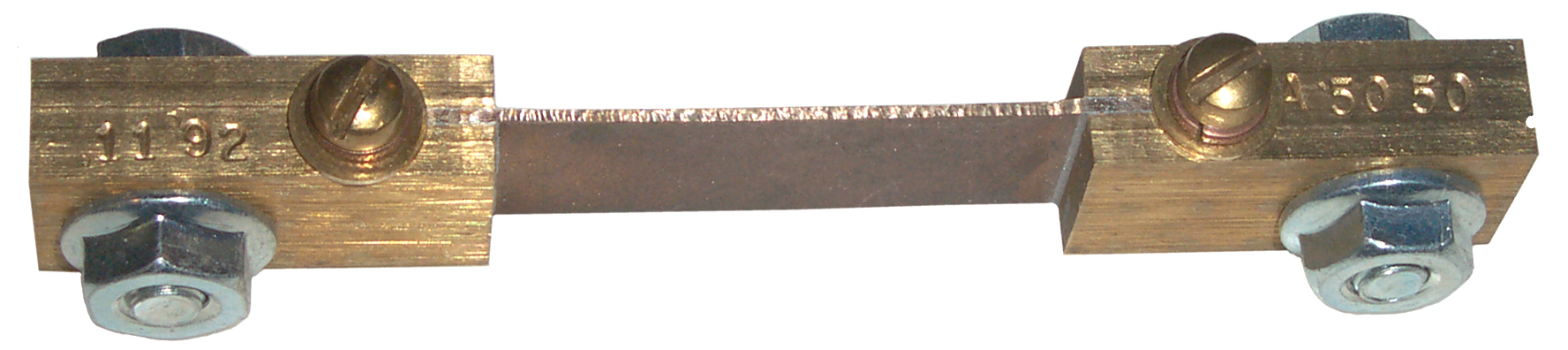
This shunt has seperate terminals for the high current and the voltage
sense and so eliminates the problem of how to connect both to a single
post. The screw is an 8-32 and the bolt is a ¼-20.
For both these sizes there are standard crimp
ring tongue terminals. You can see that here the voltage sensing
is done closer to the shunt and the current supply is outside the
voltage sensing.
A.C. Test Method
By using an A.C. signal the problems
caused by thermal EMFs is eliminated. This is how the HP 4328A
MilliOhmMeter works. The lowest range is 1 milli Ohm full
scale. It reads 1.0 milli ohms for the shunt shown above.
The same shunt has been on the HP 34401A in MIN-MAX mode for some time and the data is:
MIN: -37.9 milli ohms MAX: +3.66
milli ohms AVE: -1.19 milli Ohms #
of Readings: 516,346
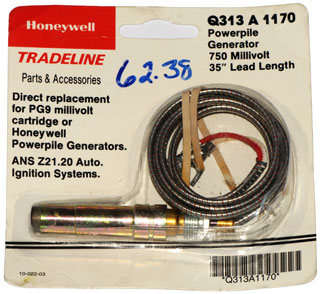
Connecting a Honeywell Powerpile 750 mv Generator with the sensor at
room temperature to the HP 34401 in 4-wire Ohms mode gives a reading of
+2.6 Ohms, reversing the test leads reads +2.9 Ohms. But as the
thermocouple is heated the apparent resistance climbs and reaches OVLD,
i.e. off scale open ckt. A few minutes after the cigarette
lighter has been removed the reading is still 4.2 ohms and it's
decreasing slowly. But the HP 4328A reads 2.9 Ohms with 400 mv DV
across the thermocouple (to get 750 mv you need more than a cigarette
lighter flame. There may be 50 0 u Ohms increase in resistance
when it's heated.
Links
Mueller - Kelvin Clips - these are available from most distributors
Pomona Electronics - Kelvin: 5940, 6303 Probe, 6730
Back to Brooke's Products
for
Sale, General Test Equipment, Microwave
Test Equipment, Bateries, Military
Information, Home
page
This is the 08546 hits since May 04 2007 time
this page has been accessed since since 12 Aug 2003.