MESCO 1011 Electric engine
© Brooke Clarke 2008
|
|
Mesco No.
1011 Electric Engine
|
|
 |
|
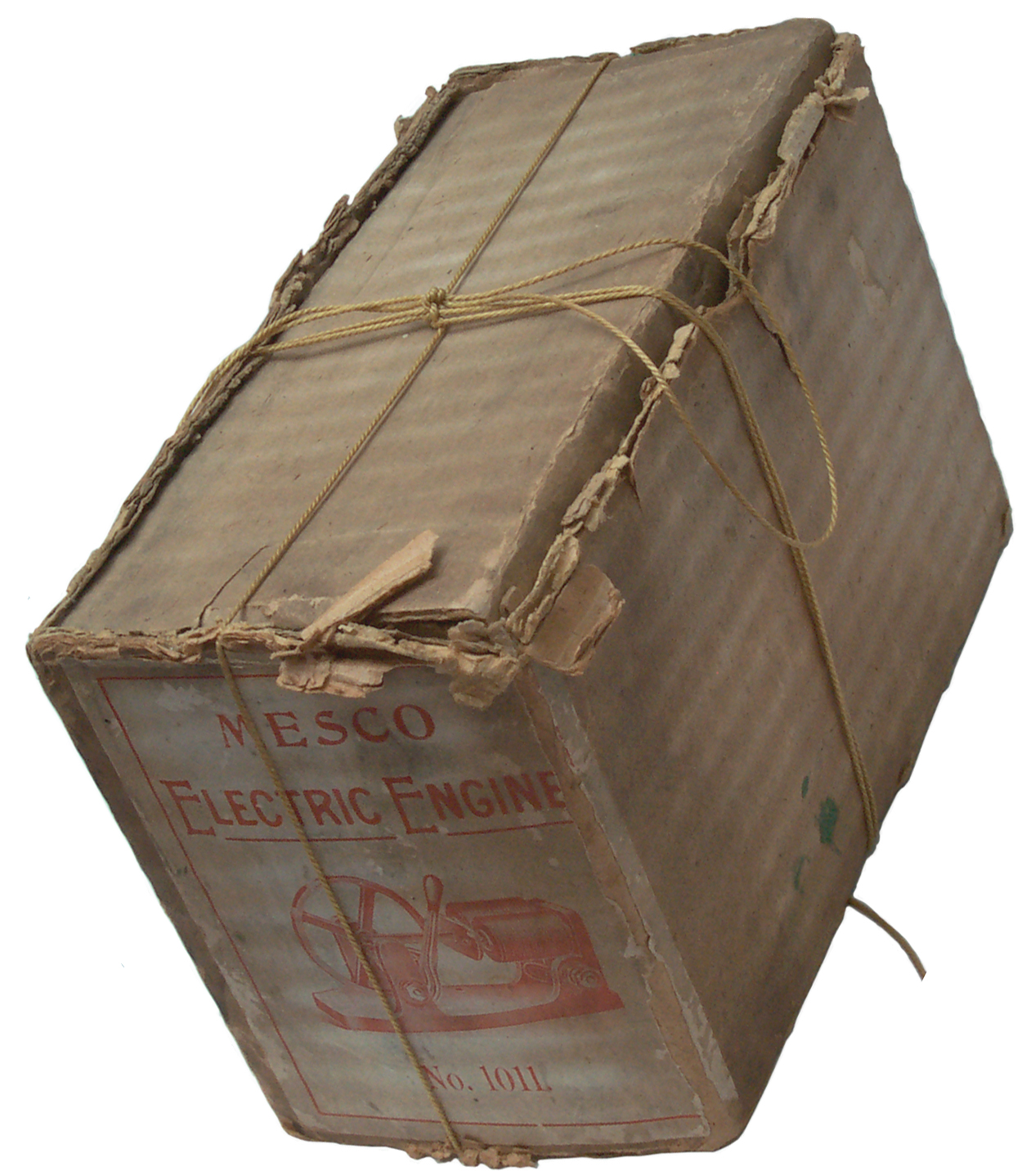
| Mesco No. 1011 Electric
Engine Box |
|
|
|
|
|
Background
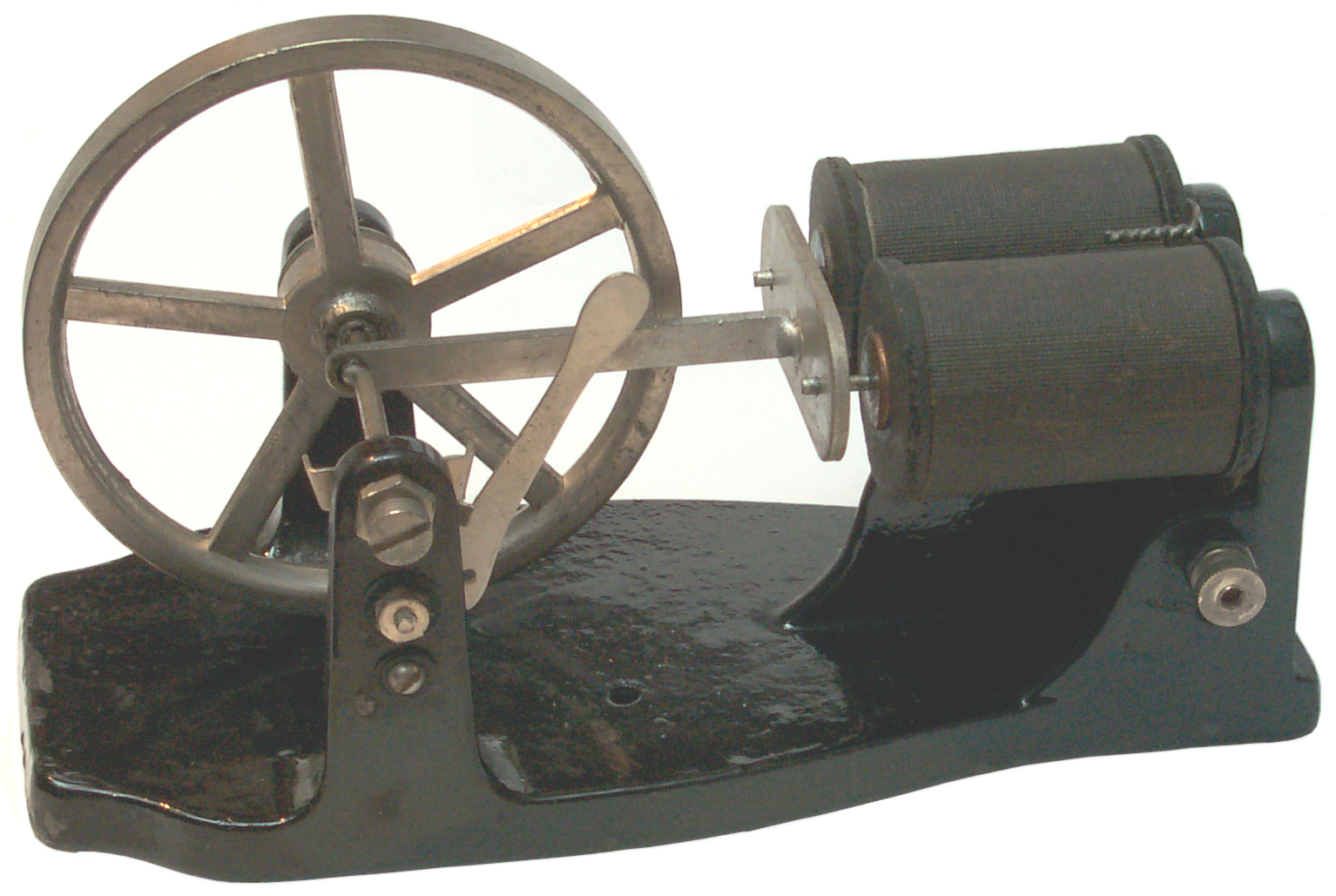
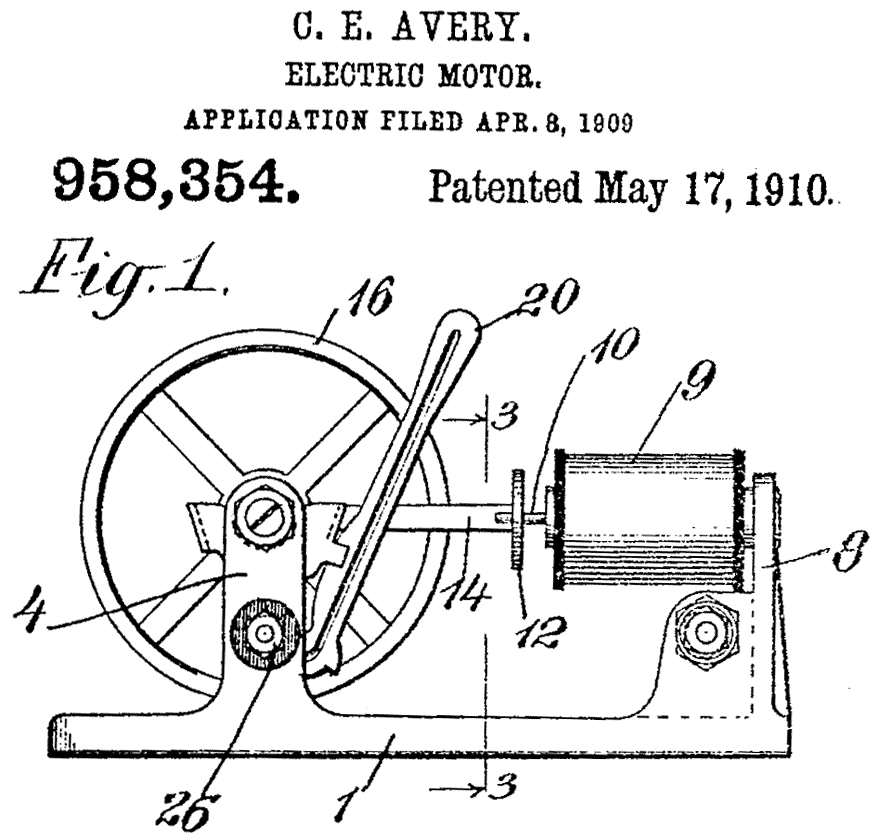
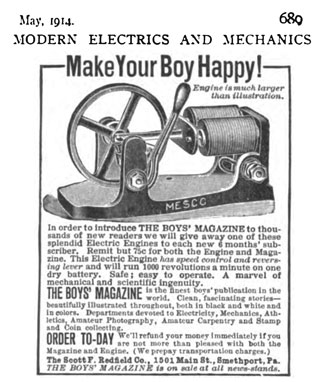
Manhattan Electric Supply Company (MESCO) made three versions
of their patent Electric Engine. The 1011 with a 3½" flywheel,
the 1012 with a 2 5/8" flywheel and the 1013 with a 2"
flywheel. This is the largest version. Charles E. Avery
was granted patnet 958354 on May 17, 1910 and it was assigned to
Manhatten Electric Supply Co.
New In Box doesn't seem correct but this electric engine comes very
close. Excellent condition, instruction sheet included.
Powered up and ran right out of the box, although I did apply a tiny
amount of oil.
Operation
Instructions call for one or more No. 6 Dry
Cells connected in series. I tried using an Agilent
E3617A bench power supply rated at 0 - 60 Volts, 0 - 1 Amp, but it
was too weak. A single No. 6 Dry Cell turns over the engine
and two of them make it run well. The instruction sheet shows
three cells which would really put out some power.
The crank has two throws, one for the connecting rod and one that
acts as part of the switch and they are 90 degrees apart. If
by chance the contact throw is pointing up or down working the
control lever will do noghting and you need to spin the wheel by
hand to get it going. This is the same for a single cylinder
steam engine.
But if the contact throw is close to either the forward or reverse
contact then moving the lever so contact is made will start the
engine without the need for manual starting. This is similar
to the "Starting from the Switch"
procedure on cars that had manual ignition advance retard controls,
like Rolls Royce cars from the 1920s or
1930s.
The lever not only allow for stopping, forward or reverse selection
but also acts as a variable speed control.
Patents
746278
Electric Toy Motor, W. Broad, Dec 8, 1903, 310/21 310/32 -
958354
Electric Motor, C. E. Avery, May 17, 1910, 310/21 310/33 -
1678397
Toy electric engine, Koenig
Joseph, Metal
Ware Corp, July 24, 1928, 446/397 310/21 446/484 -
1721447
Toy engine, Thomas S Haney, July 16, 1929, 446/484 310/23
1737051
Toy electric engine, Koenig
Joseph, Metal
Ware Corp, Nov 26, 1929, 310/21 446/484 310/32 - runs from AC mains
using transformer
1760498
Toy electric motor, Charles T Hoffman, May 27, 1930, 446/397 310/21
446/484 - sounds like gas engine
Related
Build it YOURSELF!, a REAL ELECTRIC MOTOR
- Kit to make a 2 pole D.C. motor
Electro-Magnetic Toy Engine -
sounds like a gas or steam engine
Flashlights Patents
Gilbert DC 3-pole Electro-magnetic
Machine - Gilbert? small motor + others
Leclanché Battery - wet cell
No. 6 Dry Cell
Telegraph
Telephone - phone
patents
Weeden DC 2-pole Electro-magnetic
Machine -
Western Union clocks use electromagnetic motor to self wind (page1 page 2)
Links
Back to Brooke's List of my web pages in
alphabetical order, PRC68,
Products for Sale, Telegraph, Leclanché
Battery, Electronics, Military Radio, Personal
Home page
[an error occurred while processing this directive]Page created on 28 Feb
2008